- 11 Calypso Centre, 10 Lira Link, Richards Bay
- info@zarpath.com

Take two cancer cells and compare their genomes. Surprisingly, they can be quite different.
This genetic variation is one of the hallmarks of cancer, and one reason why treating cancer is so hard.
If a tumour is made up of cells with many different genomes, a single drug might not kill them all. But, knowing the genetic variation can help us develop targeted treatments.
As part of our research, we have trapped a single cancer cell on a plastic device (see figure), extracted its DNA, and produced a coarse grained picture of this DNA’s sequence..
As part of our research, we have trapped a single cancer cell on a plastic device (see figure), extracted its DNA, and produced a coarse grained picture of this DNA’s sequence..
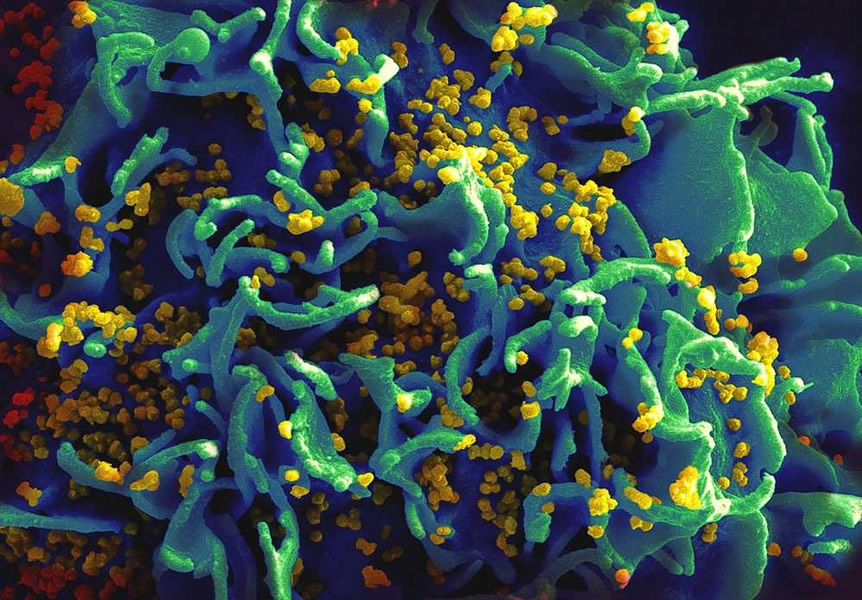
Ragon Institute researchers develop a method to identify weak points in viral proteins that could be exploited for vaccine development.
Decades of research and three large-scale clinical trials have so far failed to yield an effective HIV vaccine, in large part because the virus evolves so rapidly that it can evade vaccine-induced immune responses.
Researchers from the Ragon Institute of MGH, MIT and Harvard University have now developed a new approach to vaccine design that may allow them to cut off those evolutionary escape routes. The researchers have developed and experimentally validated a computational method that can analyze viral protein sequences to determine how well different viral strains can reproduce in the body.
That knowledge gives researchers an unprecedented guide for identifying viral vulnerabilities that could be exploited to design successful vaccine targets.